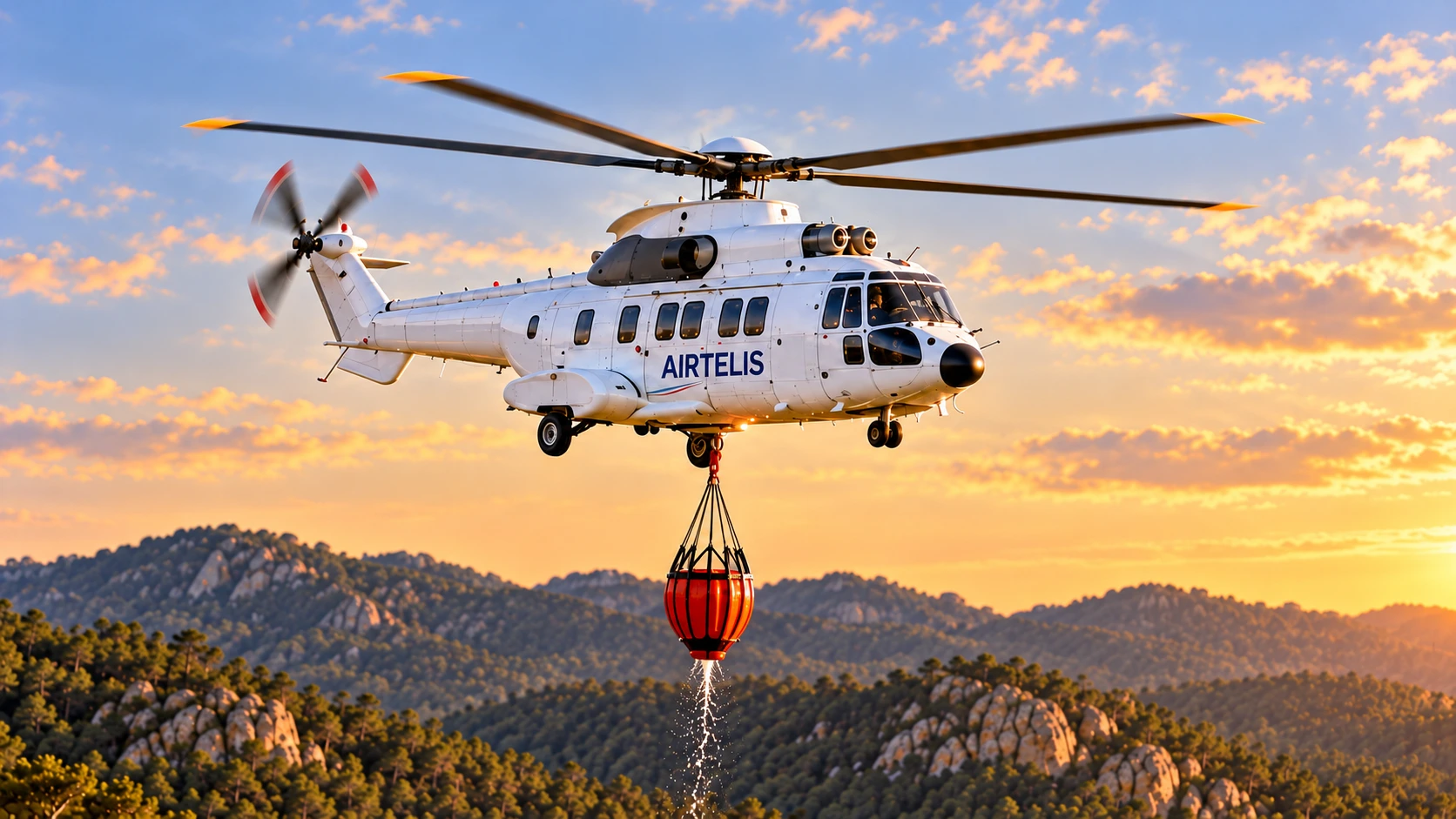
In France and Spain, Super Puma operators reported dropping a combined 122 million litres of water during the wildfire season described in an Airbus account published on 12 October. The figures put a scale on the work of pilots and support crews whose repeated trips between water sources and fire fronts underpin aerial firefighting.
Airbus attributes 56 million litres and about 14,000 drops to the French operators Airtelis and SAF, using six H225 and H215 helicopters. It reports 66 million litres and 22,000 drops for Avincis in Spain, where five Super Pumas flew 642 missions and more than 1,500 hours.
The combined figure covers those operators' reported activity in France and Spain.
A repeated cycle, not a single spectacular drop
Airbus's firefighting overview describes helicopters as part of a wider operation that includes ground teams, reconnaissance, transport and evacuation. An external bucket can carry water to places that are difficult to reach by road, while the same broad aircraft family can also move personnel and equipment.
The H215's stated water-carrying capability reaches 4,000 litres. Capacity alone does not tell the whole operational story: a useful firefighting package also depends on how quickly the aircraft can return for another load and support the people working below.
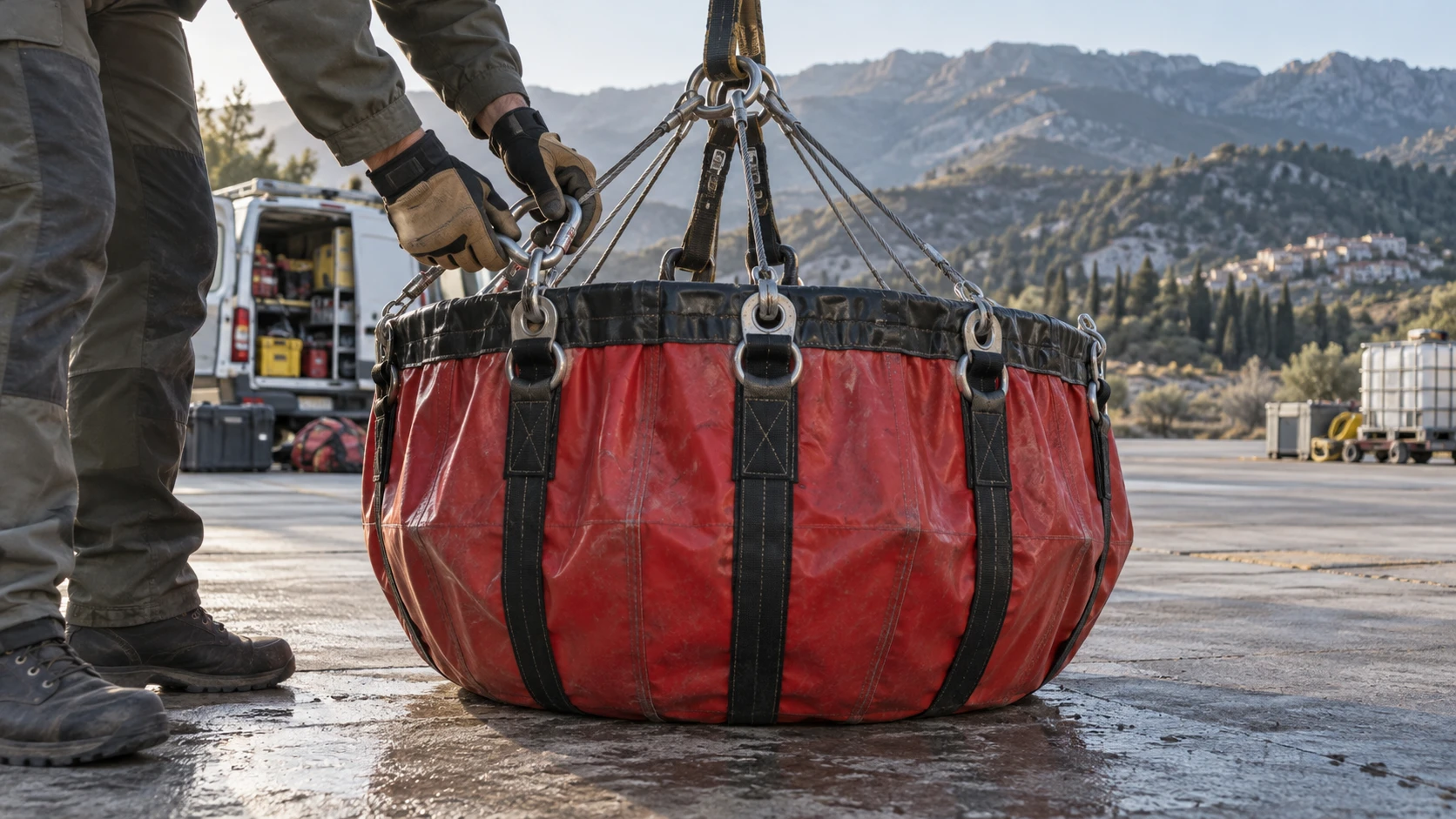
This is why a season's thousands of drops can be more revealing than a photograph of one large release. The recurring work includes preparing lifting equipment, coordinating the aircraft and arranging the next cycle.
Power reserves matter in demanding conditions
In a separate Airbus interview published in May, Quebec-based Helicarrier described the H215's engine reserves as useful for hot conditions and operations at elevation. The operator also discussed moving between contracts, including firefighting work in Chile, and using the aircraft for construction and personnel transport.
That account adds a practical perspective to the European totals. Operators are managing a specialised aircraft and an adaptable workforce, rather than a machine with only one seasonal purpose.
For aviation readers, the story behind the water-drop numbers is therefore one of deployment and repetition. The helicopter attracts attention, but its contribution comes from a complete operation: crews, maintenance, lifting equipment, access to water and coordination with the response on the ground.