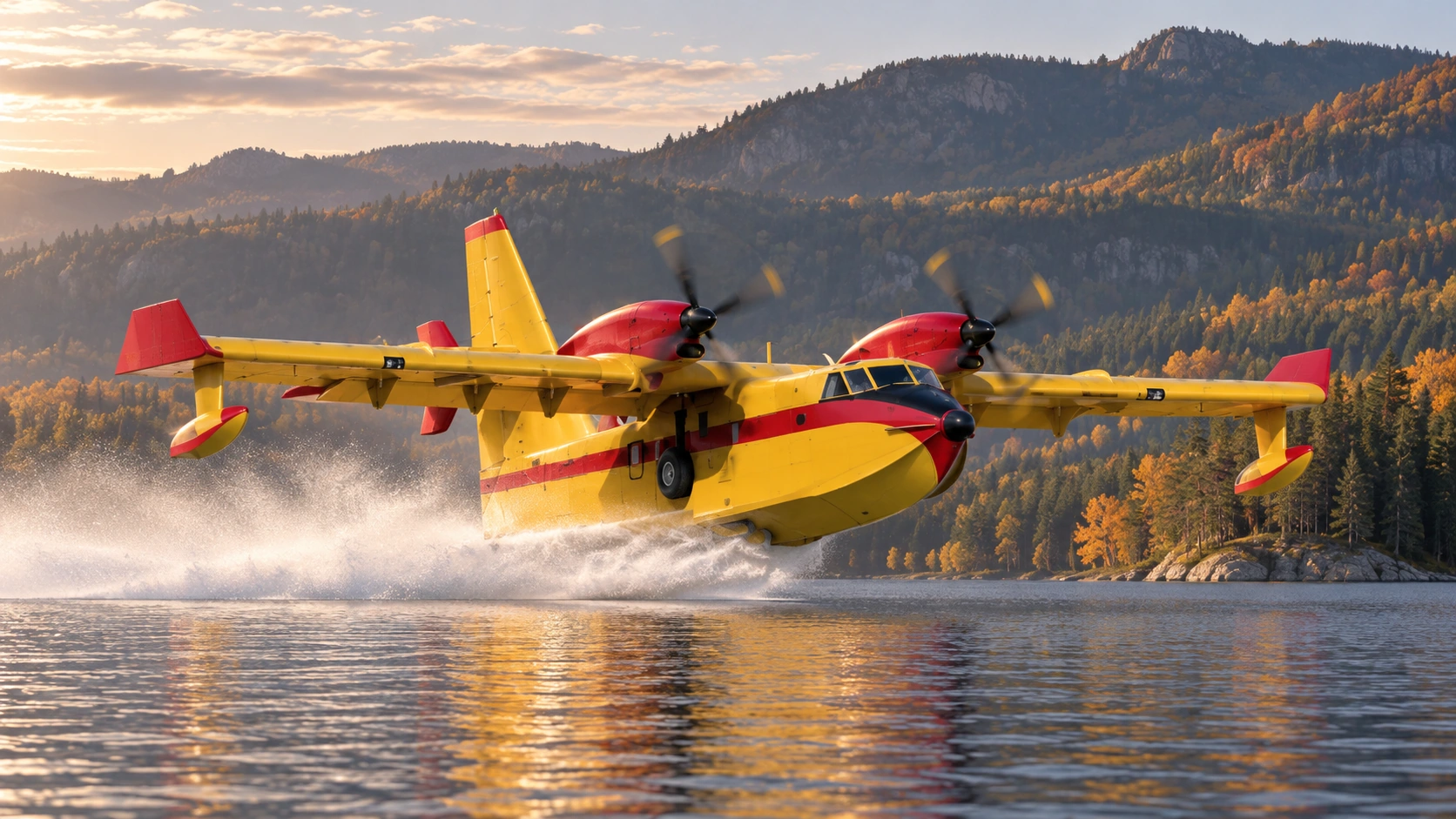
A draft prepared for the Canada–European Union summit in Montreal envisages a joint purchase of 50 De Havilland water bombers, ready for use in Canada and Europe in 2030. It is a prospective commitment in a negotiating document, not evidence of a signed aircraft order.
AeroTime reported the plan on October 7. The underlying document, published by Politico, carries a September 22 Council Secretariat cover note and a Canadian draft dated September 21. It concerns the planned October 29–30 summit and requests comments from delegations.
A proposed purchase, with important gaps
Paragraph 12 sets out the 50-aircraft ambition. It does not identify how the aircraft would be divided between buyers, provide a purchase price or set out individual delivery milestones.
It also does not explain whether existing orders would contribute to that total. For suppliers and public-sector planners, that unresolved point changes how the headline should be read: 50 aircraft in a draft cannot automatically be counted as 50 additional production slots.
Existing production provides the context
De Havilland Canada's March 10 production update said it was building 22 DHC-515 aircraft for European customers in Croatia, Spain, Italy, Greece, Portugal and France. It also reported contracts with Manitoba, Ontario and Alberta.
At that March checkpoint, the first aircraft's cockpit and hull had been joined in Calgary and the first wing box was complete. Those are dated manufacturing milestones; they should not be treated as a fresh October factory update.
The DHC-515 programme provides the industrial context, although the summit draft itself describes the proposed purchase simply as De Havilland water bombers.
Capacity includes people and support
If the proposal becomes funded procurement, its significance would extend beyond assembly work. Fleet introduction requires preparation for crews, maintenance, spare parts and the organisations that will operate the aircraft. That is an operational implication, rather than a staffing commitment announced in the draft.
Workers and businesses watching the programme should look for the final summit text and subsequent contracts to establish the actual scope. Buyer allocations and delivery schedules would make the production implications much clearer.
For emergency-response teams, aircraft counts are one part of readiness. The proposed 2030 date offers a planning horizon, while the services and trained personnel needed to use those aircraft remain essential questions for any eventual fleet plan.