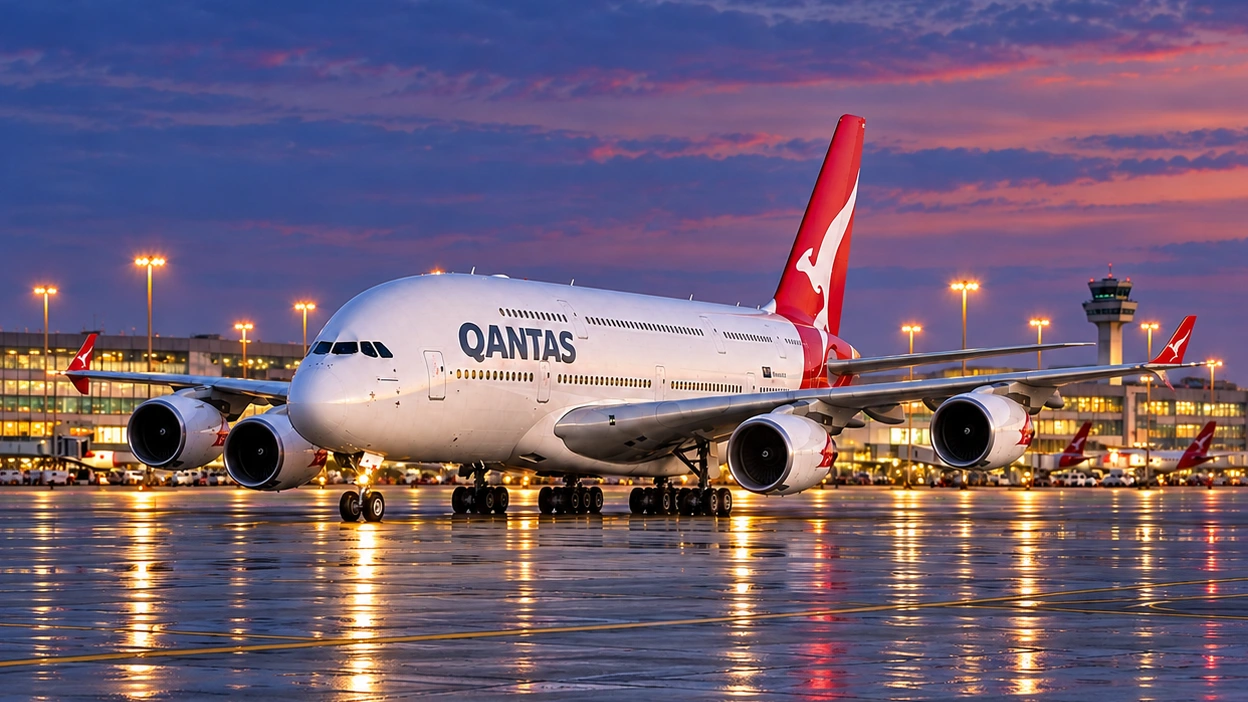
In Sydney, Australia, Qantas has set 2028 as the start of its A380 retirement programme, bringing the superjumbo's replacement closer as new long-haul aircraft approach delivery. An Aviation Week fleet review published on 9 October highlights the change as part of a wider acceleration in retirement planning.
The airline's own August results announcement confirms that the A380 fleet will be phased out gradually from calendar year 2028. That distinction matters for passengers: a starting date is not a statement that every aircraft will leave service in the same year.
New aircraft make the transition possible
Qantas links the decision to incoming Airbus A350s and Boeing 787s. Its first Project Sunrise A350-1000ULR is due in April 2027, with non-stop Sydney–London service planned for October that year. Alongside the twelve Sunrise aircraft, the airline has firm orders for another twelve A350s and twelve 787s.
In its results release, Qantas says the replacement aircraft will be able to cover its existing international network and open additional routes. It expects the change to reduce operational complexity.
A global fleet moving at different speeds
Aviation Week's analysis says Qantas's ten A380s are now expected to begin retiring in mid-2028, compared with a previous 2032 starting point. It also identifies faster retirement planning at Asiana.
The same review notes that the number of A380s in service has been relatively steady between 2024 and 2026. A stable recent fleet and a changing future schedule can therefore both be true. Aircraft already flying today do not vanish when a retirement plan is announced.
For anyone hoping to fly on the double-decker, the practical question is the operator and route, rather than a single worldwide end date. Each carrier sets its own replacement timetable.
What to watch next
The next meaningful developments will be replacement deliveries and more detailed withdrawal schedules. Qantas has given the transition a beginning, but the announcement does not supply a complete aircraft-by-aircraft calendar.
That leaves the A380 in a familiar stage of airline fleet management: still part of current operations, while the investment decisions that will eventually replace it are becoming more concrete. Travellers should distinguish that long-term direction from the equipment shown for a particular booked flight.